the roman forum
the roman forum was in many ways the heart of rome. during the republican era of rome's history, the senate met in one of the buildings in the forum, and the area for public assemblies was also in the forum. the law courts met in open-air buildings, called basilicas, in the forum. during the imperial era, the law courts and senate continued--albeit in different form, with an emperor in charge--until the 6th century A.d., when the forum was abandoned. during the middle ages, it was a cow pasture, and only in the 20th century was it excavated and collapsed columns re-erected.
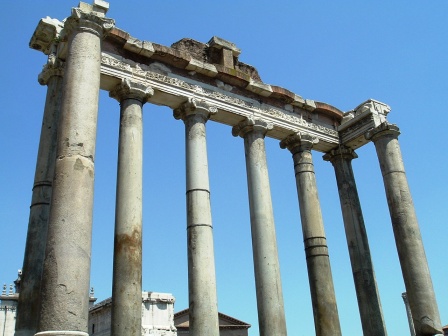
in some cases, only fragments of ancient buildings remain. this is the temple of saturn. the roman state treasury was housed in its basement.
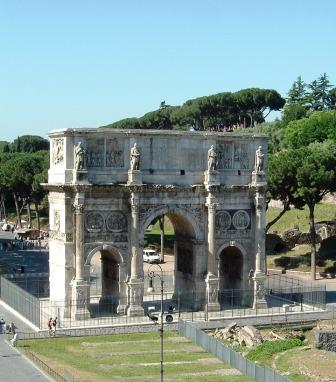
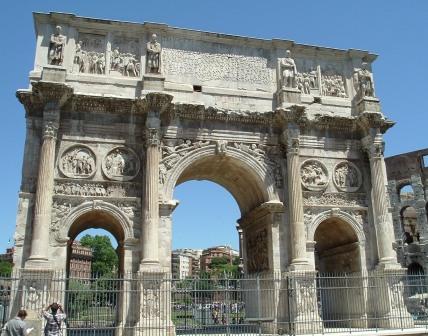
in other cases, structures survive remarkably intact. this is the triumphal arch of constantine, the 4th-century roman emperor who converted to christianity. it reflects the declining fortunes of the empire, since sculptures were reused from older buildings for the arch, to save money and benefit from skills lacking in the later empire.
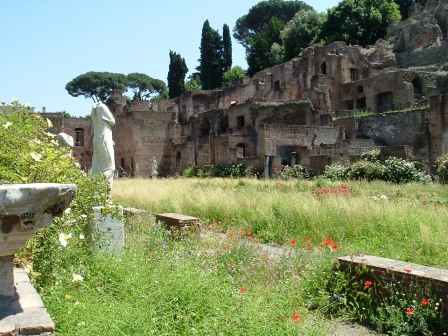
in still other places, only hints of what once was exist. this was the residence of the vestal virgins, women of noble roman families chosen to tend the eternal flame of the goddess vesta, who remained celibate--and faced death for breach of their vows. the practice originated in the earliest period of roman history, and continued until the fall of the empire.
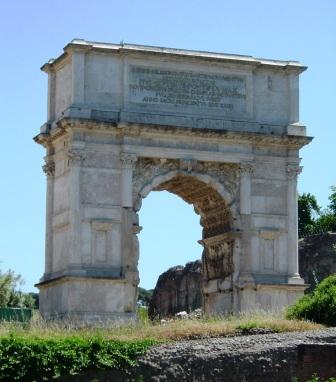
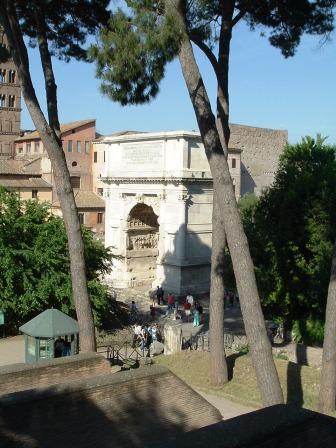
the triumphal arch of the emperor titus, who ruled from 79 to 81 a.d.
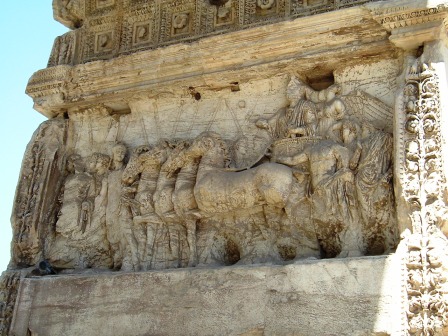
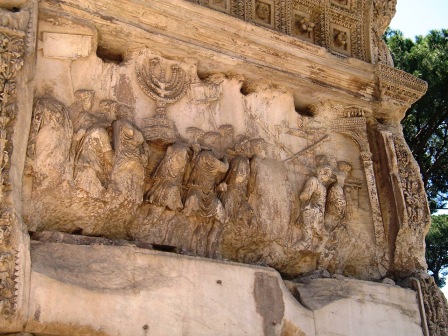
like all triumphal arches, this one was built to commemorate a significant military victory. in this case, titus was celebrating his victory over the jews, who had revolted against roman rule in 70 a.d. after the last jewish resistance was eliminated at masada, titus had this arch begun. it includes scenes of the sack of jerusalem by roman soldiers, including the carrying off of a large menorah candelabra.
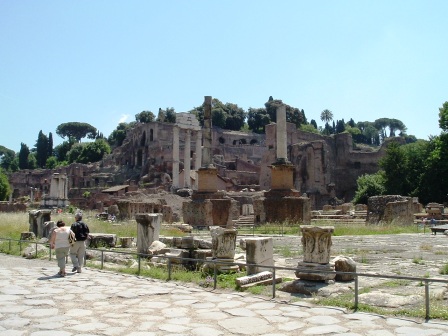
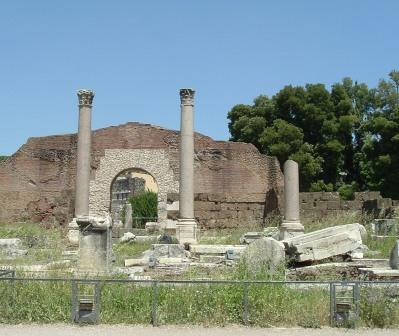
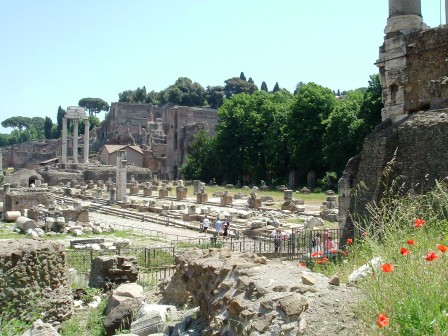
not much remains of the basilicas, where trials were held.
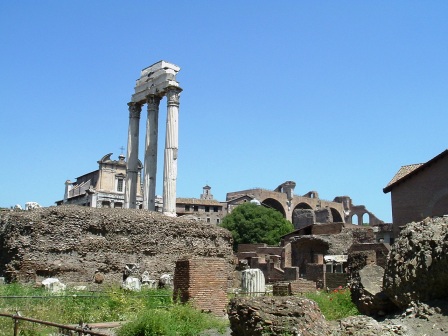
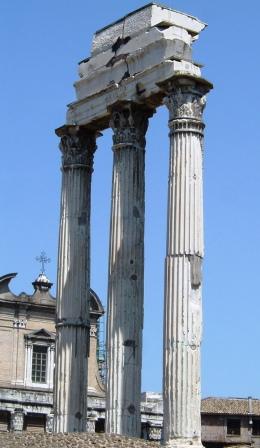
this arches are all that survives of the temple of the twin gods, castor and pollux, who were believed to have helped the romans win an early military victory against neighboring peoples.
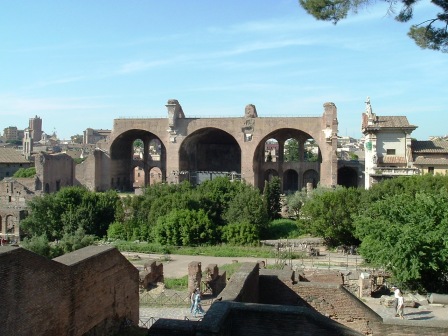
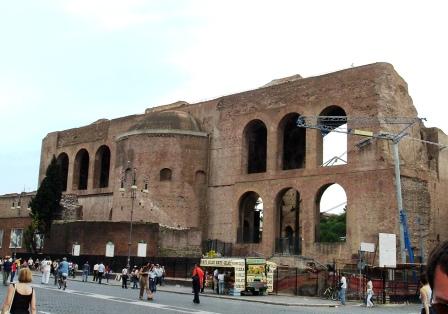
the last basilica to be built on the forum was this one, called the basilica of maxentius and constantine. maxentius ruled rome from 305 a.d., but in 312 he was defeated and killed by constantine, who claimed that the christian god helped him to victory--and who completed the basilica.
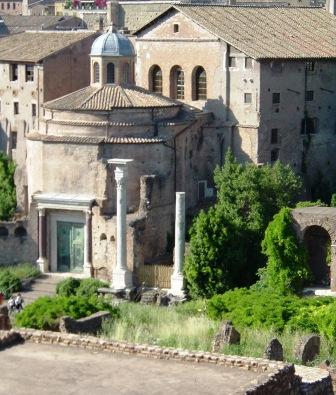
this is the temple of romulus--not named after the founder of rome, but after the son of the emperor maxentius, who died in 307 a.d. the rounded mausoleum was well preserved, because it was used as the entryway to a church built behind it in the middle ages.
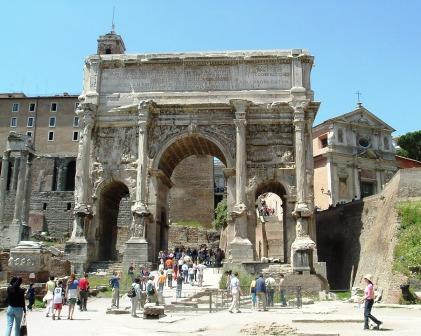
this is the arch of septimius severus, built 203 a.d. after the emperor's victories over the parthians, which saw him add mesopotamia to the roman empire.
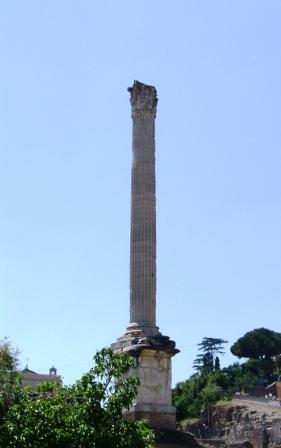
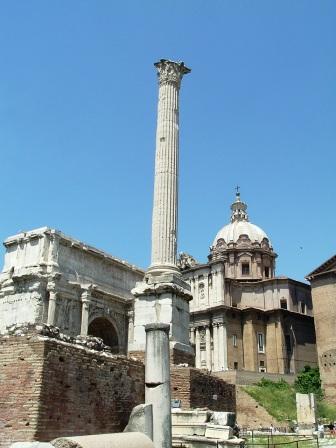
this column was the last thing added to the forum: a gift to the city of rome from the byzantine emperor phocas in 608 a.d. in this period, the byzantine emperors were still claiming to be the rightful emperors over the whole of the roman empire, but were unable to enforce that claim.
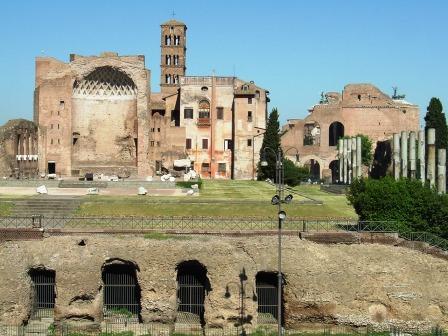
this photo shows the apse (or rounded end) of the huge temple to the goddesses venus and rome. in the middle ages, part of the temple was used for a church to the virgin mary, rebuilt and rededicated to saint frances of rome (santa francesca romana) in the 17th century. the 12th-century campanile still stands.
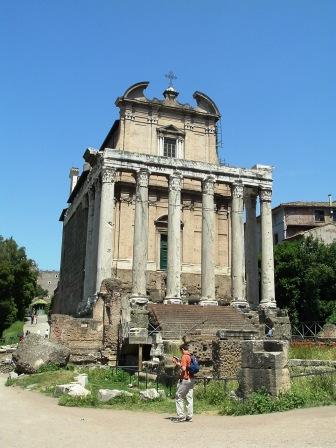
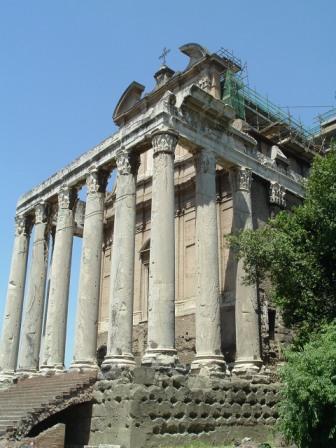
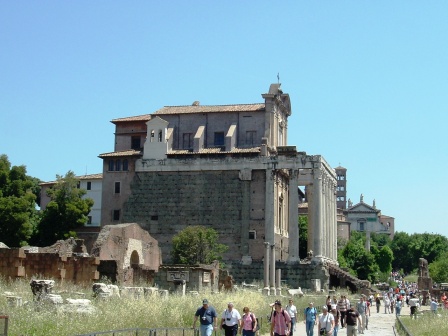
another recycled temple: built in 141 a.d. by the emperor antoninus pius to honor his empress faustina, whom he proclaimed a goddess, it was dedicated also to the emperor himself when he died in 161. in the middle ages, it was converted into a church to saint lawrence (san lorenzo). the present-day church dates from the 17th century.
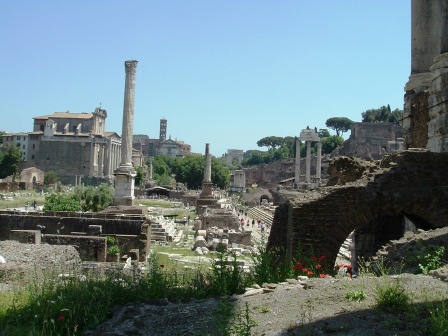
a final view along the length of the roman forum.