PAESTUM
PAESTUM
paestum was begun as a greek colony in the south of italy in about 600 b.c. at that time, the greek city-states were major maritime powers and, with an expanding population, they established colonies across the mediterranean, including in what became Turkey, France, and Libya. Most of their colonies were in southern Italy, as with paestum, which was originally named poseidonia, after the greek god of the sea, poseidon. eventually the greek colony was conquered by a local tribe, the lucanians, and later still, conquered by the romans beffore being abandoned. today paestum is an important archeological site, and has an excellent museum of local discoveries. at present only the central public area of the town has been excavated.
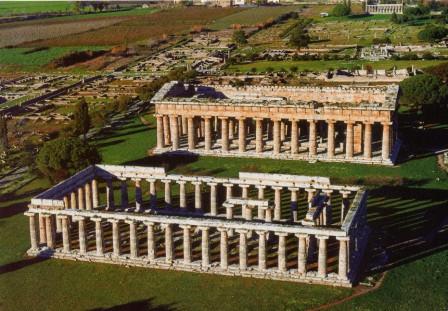
a postcard image of the archeological
site.
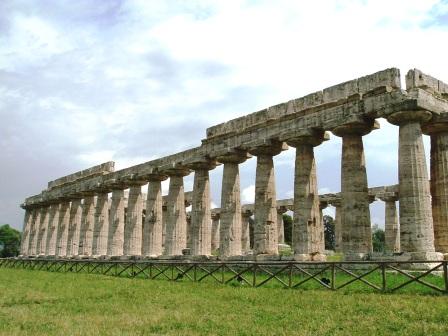
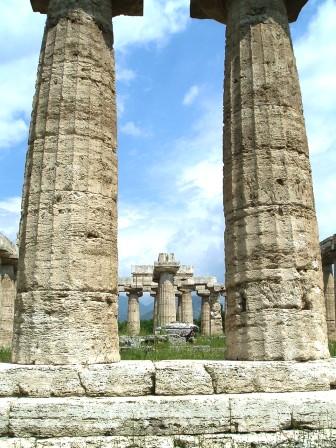
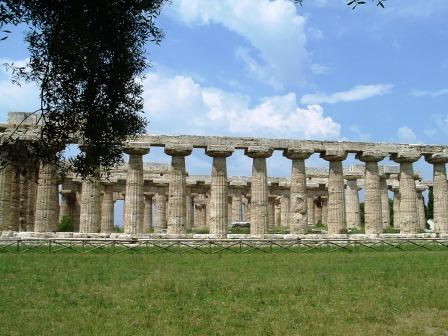
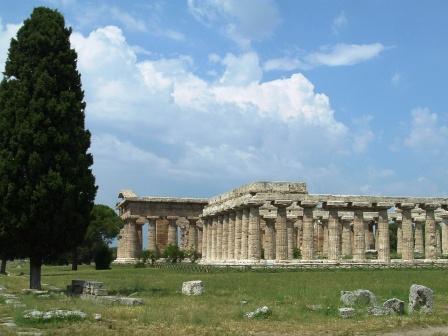
the oldest of the temples, built in the mid-6th century b.c., is called the
basilica (a misnomer) and was dedicated to hera, greek goddess of the hearth
and home.
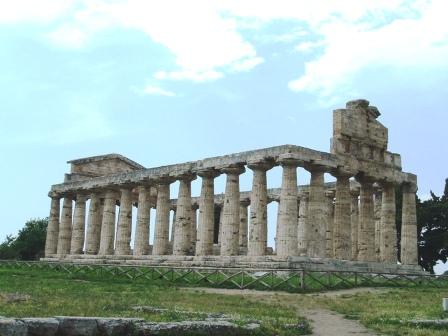
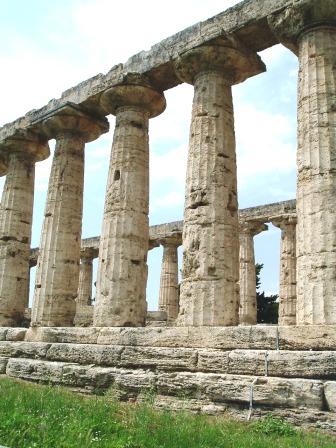
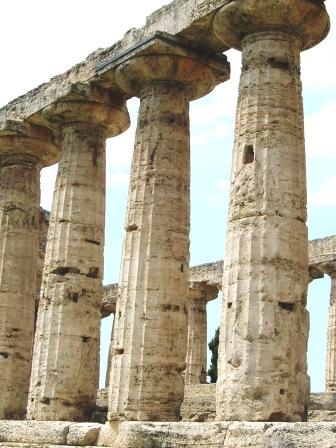
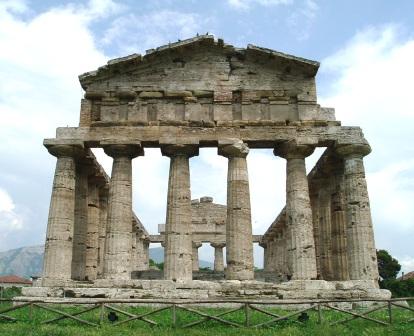
the next oldest temple is the so-called temple of ceres, dating from the late
6th century b.c., which scholars now think was dedicated to athena, the greek
goddess of wisdom.
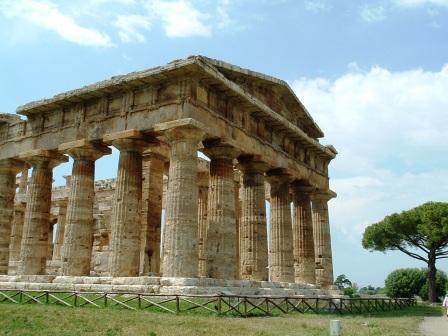
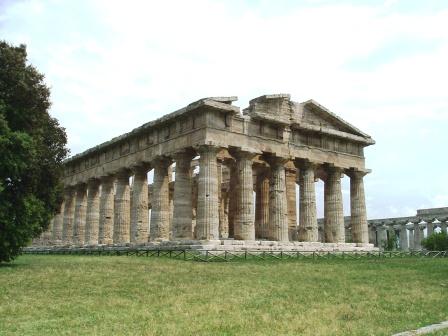
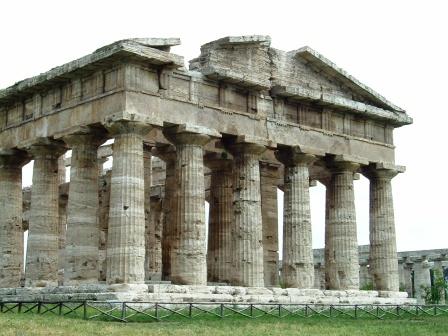
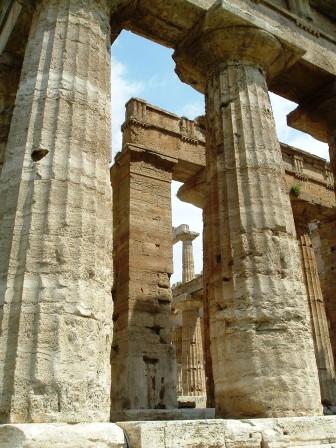
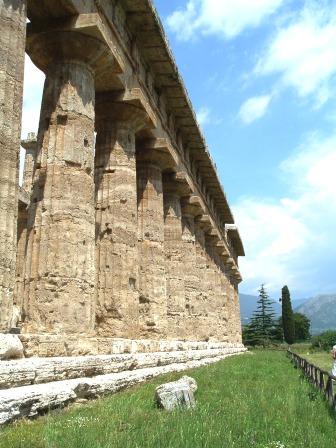
the third of these massive temples was the last built, in the mid-5th century
b.c., and is called the temple of poseidon, although again scholars now think
it was dedicated either to zeus, greek god of the sky, or to apollo, greek god
of the sun.
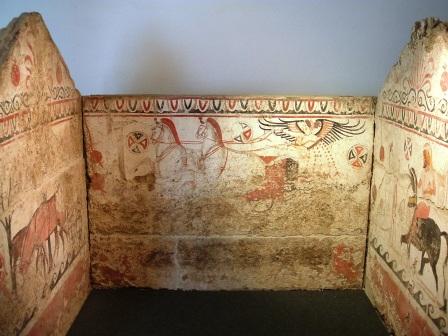
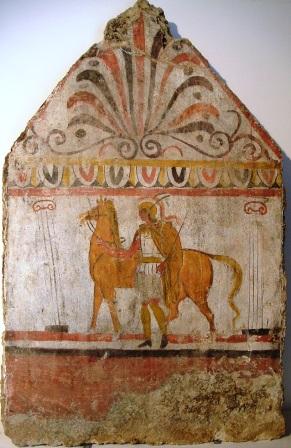
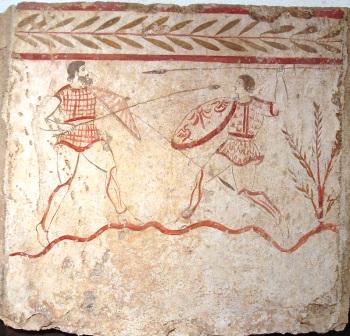
the archeological museum houses some amazing artifacts found in the area, including
these lucanian tombs of the 4th and 5th centuries b.c., built like miniature
houses and decorated with frescoes--mythological scenes, hunting and battle
scenes, scenes of everyday life--on all sides and on the roof slabs. they are
an interesting mix of local and greek-imported customs, since the artwork is
very much like the greeks, but nowhere else in the greek world did such burials
take place.
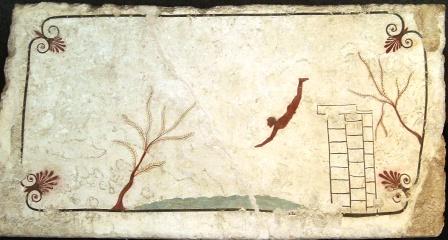
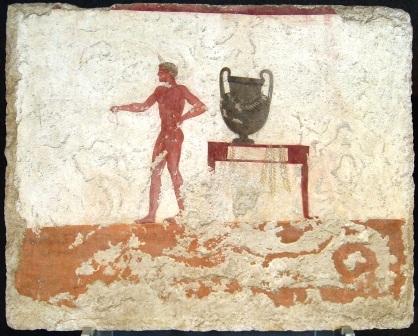
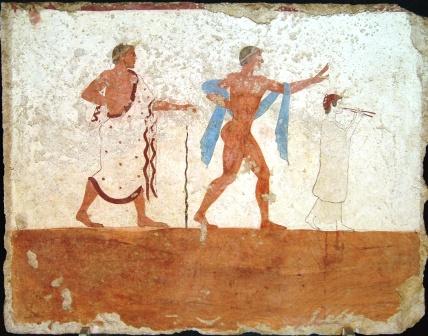
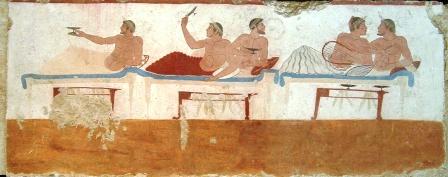
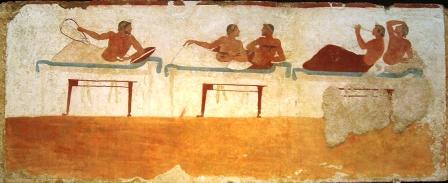
one of the most famous of these tombs is the so-called tomb of the diver, from
about 475 b.c., named after the figure diving from a tower into a pool of water,
that formed the roof of the tomb. the other scenes of surrounding the deceased
show a banquet, with musicians and a large vase filled with wine (in one, the
partyers hold up the empty shallow cups for drinking wine, probably for refills).
perhaps the scenes commemorated the deceased's favorite memories, or perhaps
a wish about the nature of the afterlife.
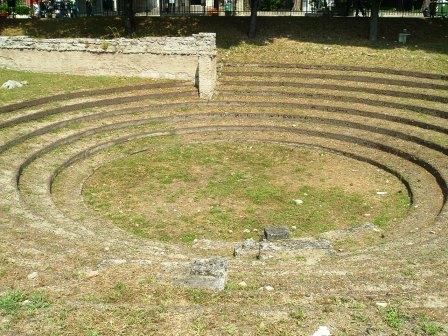
From roman-era paestum, the depression of the amphitheater remains.
the trip to paestum, while a bit out of the way, was well worth it, we all agreed,
and turned out to be one of our favorite sights of the whole trip!