POMPEII
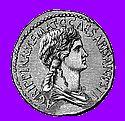
what would a visit to campania be without a trip to pompeii? apparently, that is how most people feel, and tourists off by the busloads swarmed the streets and houses of this roman town. but can you blame them? pompeii was buried in 79 a.d. when mount vesuvius exploded in a volcanic eruption. it was discovered in the 18th century, and ever since, has remained a popular tourist destination, offering a glimpse at everyday life in the roman empire.
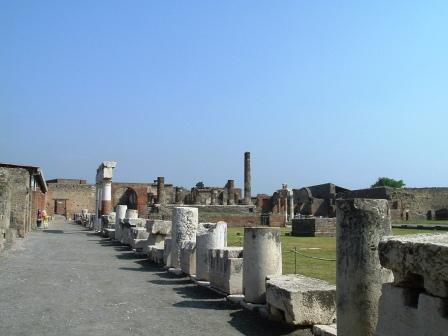
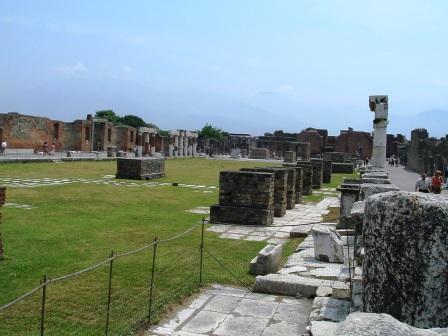
this is the forum of pompeii, its main public square, once lined with temples
and shops.
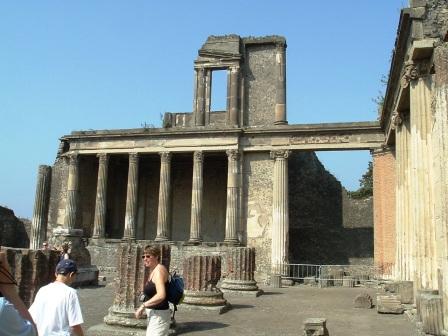
this is the basilica, where legal cases were heard and judged.
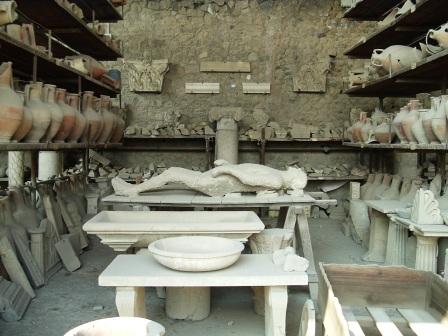
although most of the artifacts found at pompeii have long ago been dispersed,
most to the archeological museum in naples, new finds are housed on site. Here,
hundreds of pottery vases, used for storing all kinds of liquids from wine to
oil to fresh water, line the shelves and surround a more gruesome artifact:
a human corpse, petrified by the volcanic ash in the exact pose in which the
individual died.
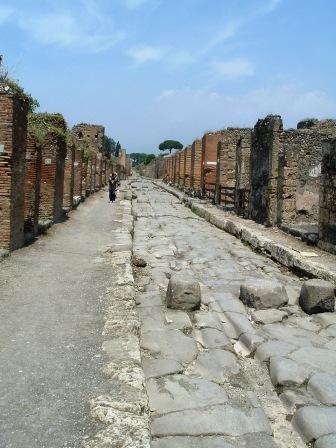
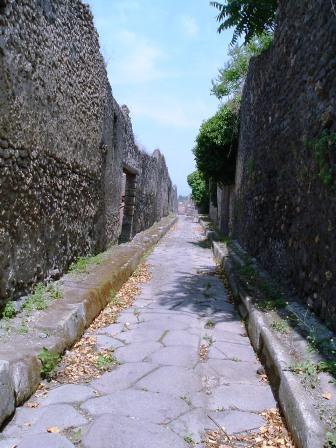
looking down the streets of pompeii gives a real sense of a living town, suddenly
abandoned.
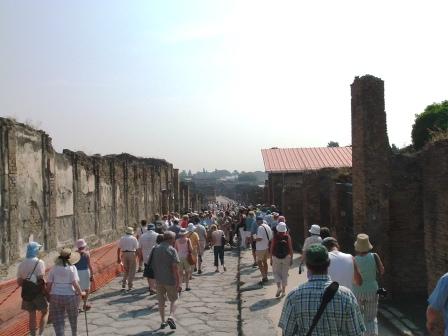
well, the streets aren't so abandoned anymore.
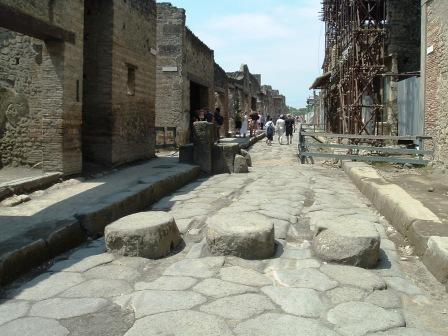
notice the large boulders placed in the streets at strategic intervals, done
so that people could walk across without getting dirtied from the slop, mud,
and worse that flowed down the streets, yet still allowing wagons and chariots
to cross through.
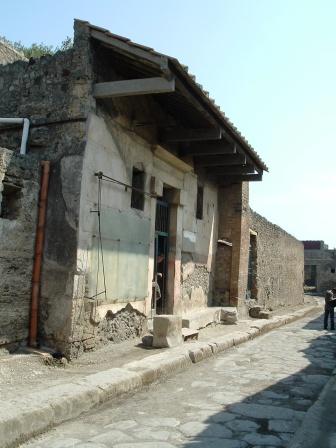
the homes are not all that impressive, from the street. This one has the original
plaster on its front wall, although the overhang is modern, built there to preserve
the plaster.
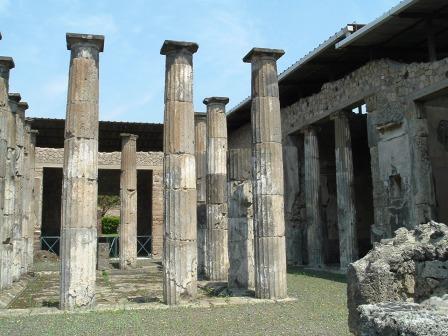
instead, roman homes concentrated on decorating the inside. the typical pattern
was a series of rooms built around two courtyards. the front courtyard was called
the atrium, and was mostly covered, with the center portion open to the sky,
below which was a small pool used for collecting rainwater. here the columns--a
sign that this was a wealthy home--would have marked the edge of the roof, and
the pool they surround is still visible. the rooms opening onto the atrium would
have been public rooms, where families received guests, and where the kitchen,
dining room, and study were located.
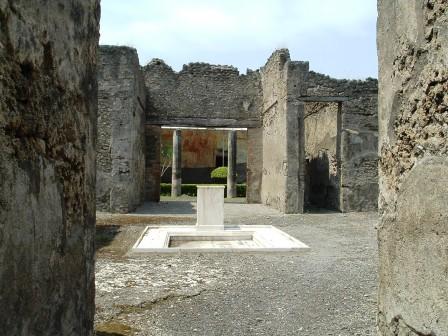
only family members moved beyond the first courtyard to the second one, called
a peristyle, toward the back of the house. this courtyard was more open to the
sky, and often included an herb garden in it. the rooms around this back courtyard
were the bedrooms, usually no more than a sleeping cubicle large enough for
a bed and without windows. (small spaces like that were probably easier to keep
cool in the summer, surrounded by thick walls, and warmed in the winter by braziers
or small portable firepits.
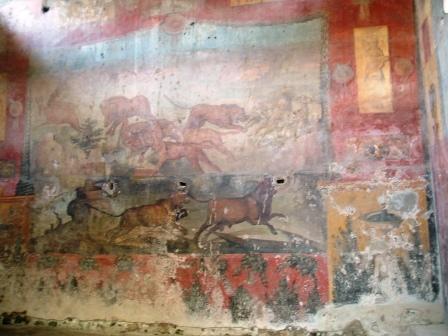
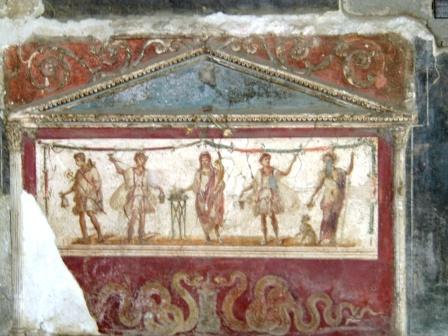
the real splendor of pompeii can be seen in the frescoes that decorated the
walls of homes, such as the hunting scene (left) or the mythical figures (right).
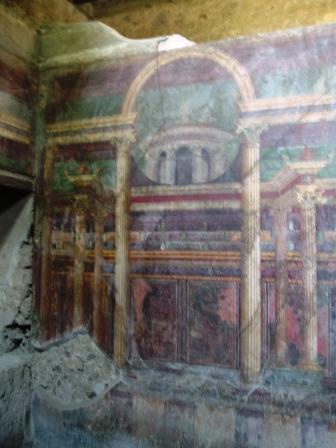
fashionable for a while were trompe l'oeil frescoes, meant to trick the viewer
into thinking that he or she was looking beyond the wall, as here, through an
archway to a garden and temple beyond.
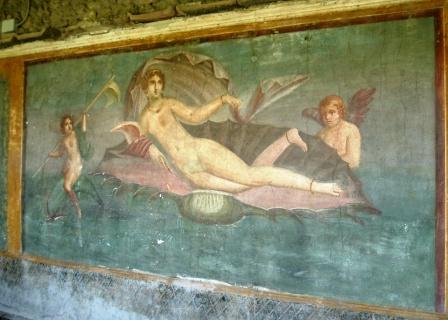
some of the frescoes are so impressive that the houses are now named after them,
in the absence of any other information about the owners, such as this one,
in the House of the venus and the shell.
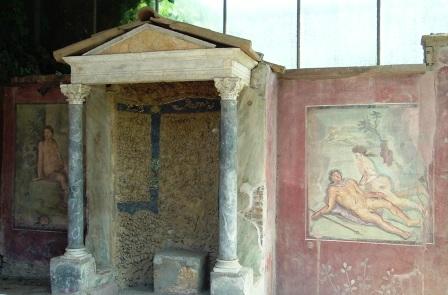
the ancient romans had household gods, including the spirits of their ancestors,
which were revered in small shrines like this one, located in the private part
of the house.
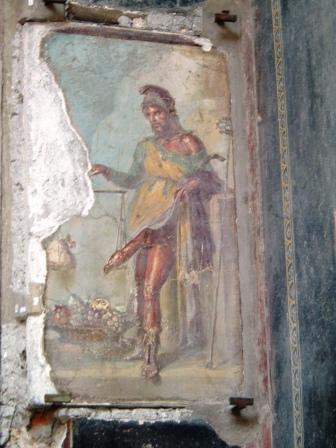
all roman homes also had a painting or sculpture of priapus, who guarded the
house against intruders.
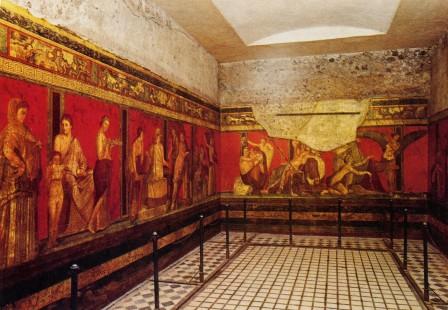
one of the best known homes in pompeii is the villa of the mysteries, built
outside of town and still possessing the frescoes in the dining room that give
the house its name: they represent stages of religious initation in the rites
of dionysus, one of the mystery religions so popular in the roman empire, so
called because their rites were known only to their followers.
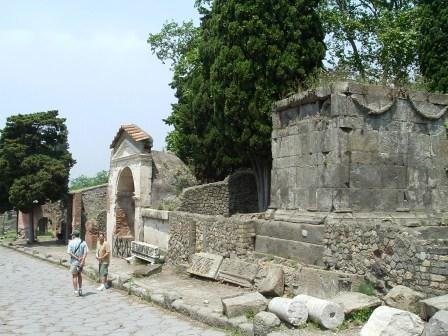
because it is outside of town, the street to the villa of the mysteries is lined
with tombs of townspeople.
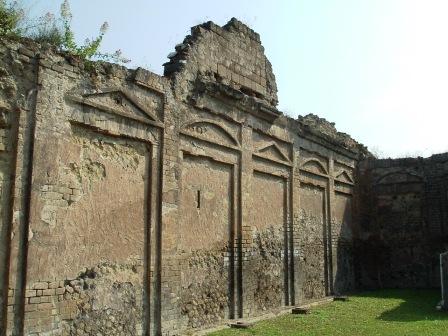
public buildings also survive in pompeii, including this temple to the egyptian
goddess isis, who was also popular among romans.
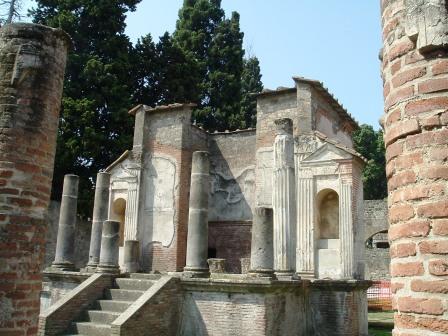
as with most pagan temples, the temple itself was surrounded by a larger precinct,
since most pagan rituals happened outside of the temple.
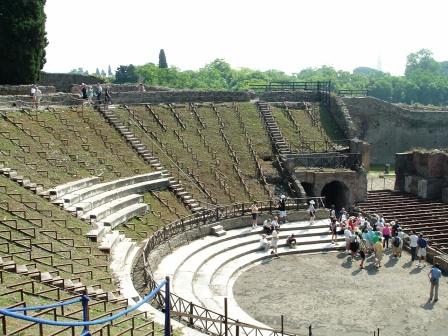
another public building is the theater, where plays were performed.
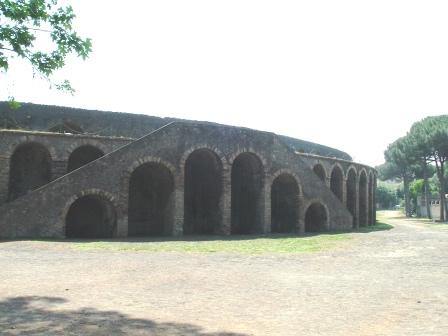
in another part of the town is the amphitheater, where gladiatorial contests
and other sports were held.
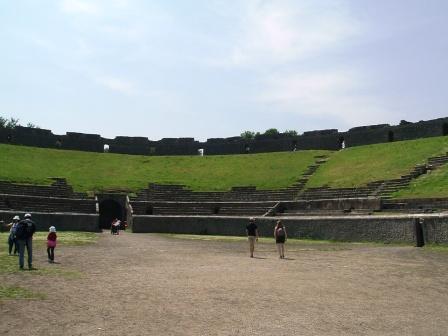
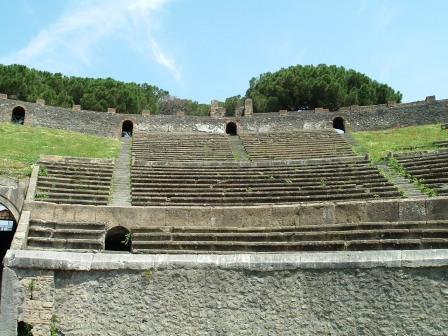
the amphitheater at pompeii is the oldest surviving one from the roman empire,
built in about 80 b.c.
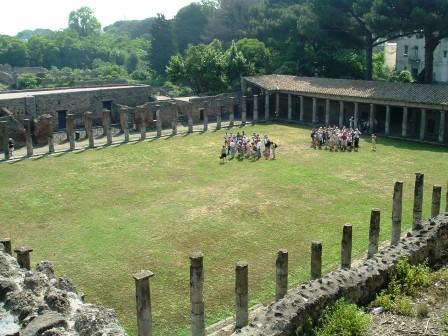
these were the gladiators' barracks.
another hot day in the sun! after a late lunch--and an unexpectedly good local sparkling wine, called pompeiano frizzante--we headed back to our hotel.