vatican city
no trip to rome would be complete without a visit to vatican city. it is the smallest sovereign state in the world, at 109 acres and about 1000 inhabitants. it is built over the place where st. peter was said to have been martyred, and there has been a christian church there since the early 4th century a.d. Before that, there was a roman stadium and cemetery on the site, outside of the walls of ancient rome. in fact, the residence of popes in the middle ages was another roman church, st. john lateran, and it was only in the renaissance, when the popes returned from avignon, that they moved to the vatican, which was easier to fortify. from the vatican, popes between the 16th and 19th century ruled over much of central italy, called the papal states. when italy was unified as a country, in 1870, the papal states were confiscated, but creating the tiny independent state of vatican city was a concession meant to compensate for that confiscation.
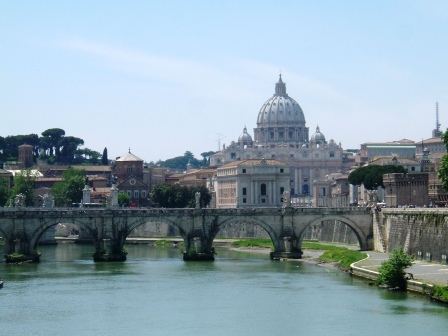
the dome of st. peter's basilica is the largest in rome, and visible from much
of the old city. the dome was designed by michaelangelo, who died before it
was completed.
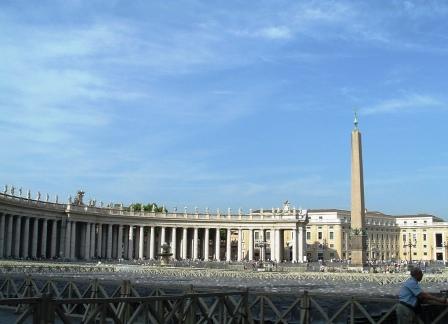
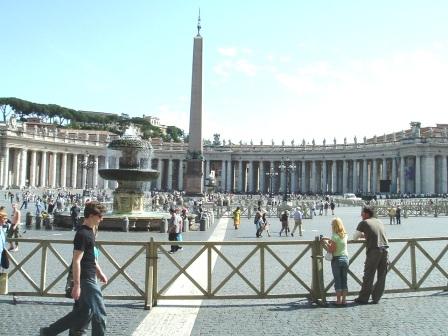
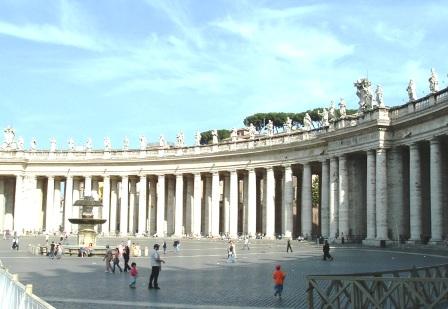
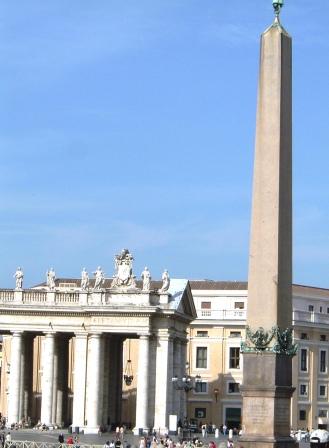
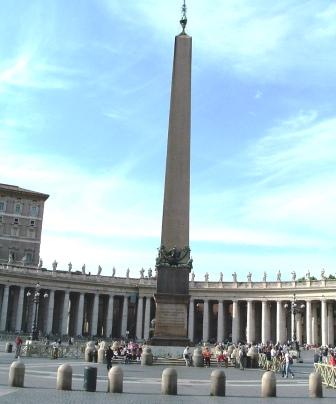
the large square in front of st. peter's basilica--difficult to capture in its
immensity in a photo--was designed a century after Michaelangelo by Bernini.
at its center is a large egyptian obelisk brought to rome by caligula and first
set up in the roman stadium on the vatican hill. A piece of the cross of Jesus'
crucifixion is supposed to be contained in the decoration at the top of the
obelisk.
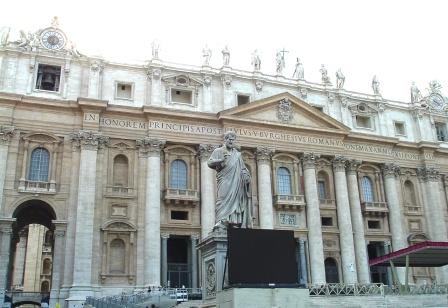
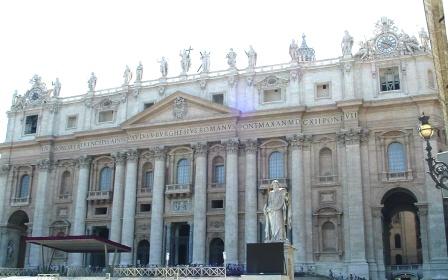
In front of the main entrance to the basilica are large statues of st. peter
and st. paul. the temporary canopy was still in place from all of the public
functions that happened earlier in the year for the death of pope john paul
II and the election of pope benedict xvi.
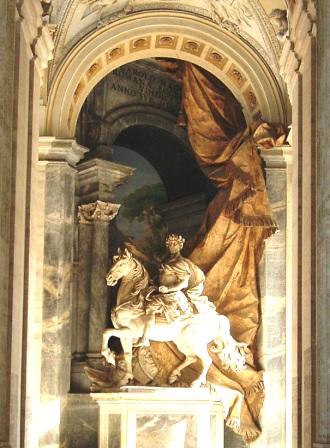
inside the porch of the basilica is a huge statue of Charlemagne, who was crowned
emperor by the pope on christmas day in the year 800 (after him, it became precedent
for all future holy roman emperors to travel to rome and be crowned by the pope.
even napoleon had himself crowned emperor by the pope, although he made the
pope travel to paris.)
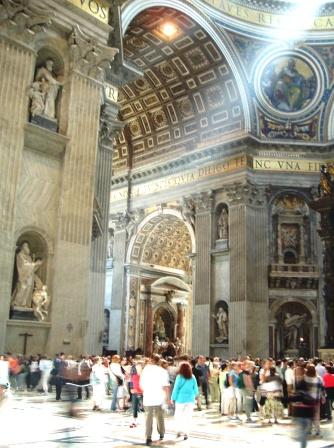
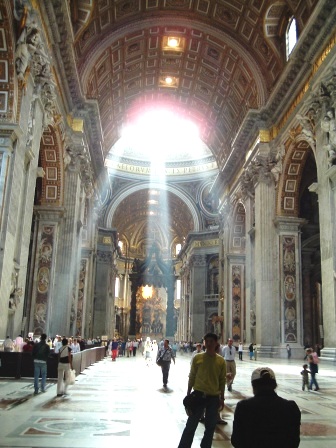
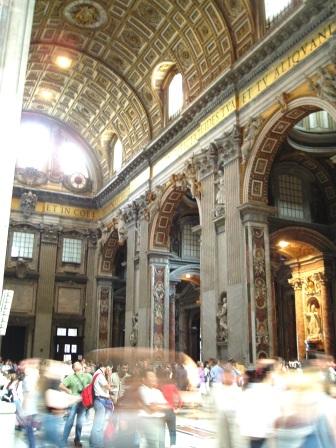
the interior of the basilica was designed by bramante, and is overwhelming in
its size and opulence.
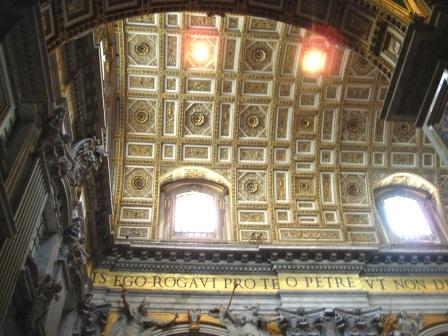
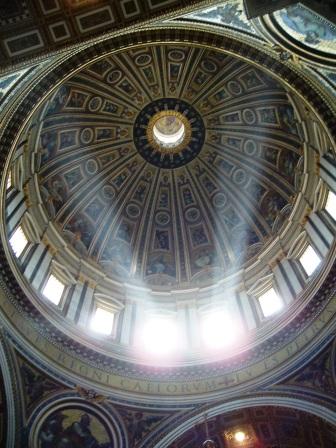
the windows and apertures in the roof and dome let in shafts of sunlight from
all directions.
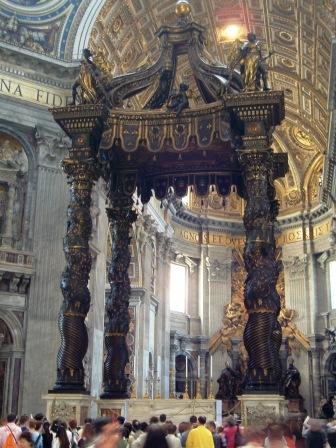
above the main or high altar is a baldaquin, based on a portable canopy used
in outdoor religious processions, also designed by bernini.
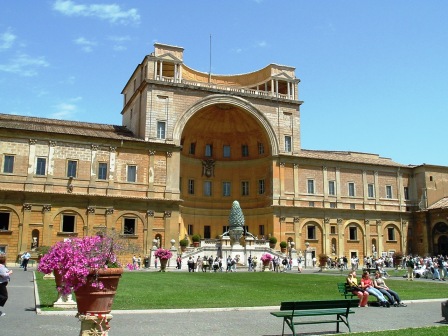
also on the grounds of vatican city is the extensive papal palace. some of the
palace is closed to the public and still the residence of the popes, as well
as the offices of catholic church officials, but parts of the palace are open
to the public and house the vatican museum.
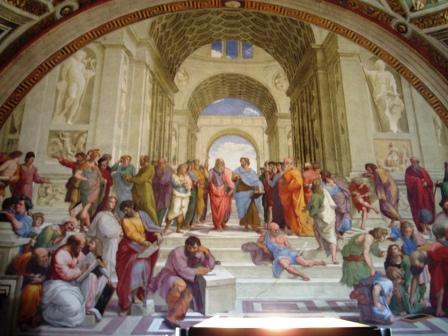
among the most famous parts of the papal palace are the sistine chapel and the
former papal apartments, that include frescoes by the leading artists of the
renaissance. this fresco was painted by raphael, and symbolizes the rebirth
of classical learning that typified the renaissance, since it portrays the ancient
greek philosophers assembled in ancient athens.
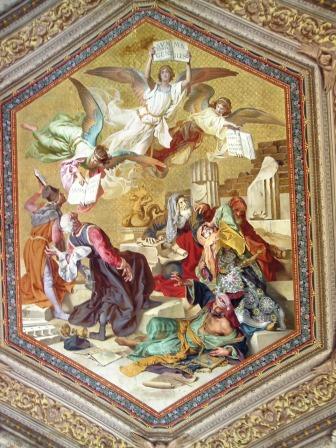
throughout the papal palace, though, there are luxurious wall and ceiling frescoes,
like this one, the confounding of jews and muslims by angels on the side of
christians.
the museum is a vast treasury jammed with roman sculptures:
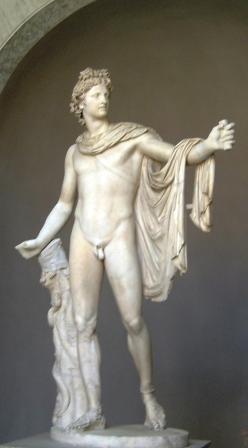
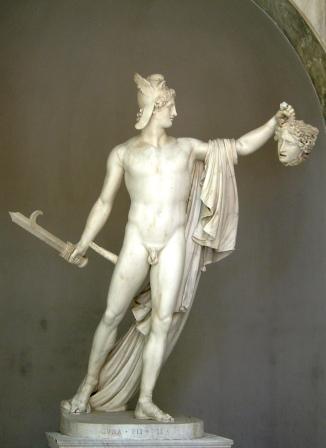
the apollo of the belvedere, on the left, and perseus with the head of medusa,
on the right.
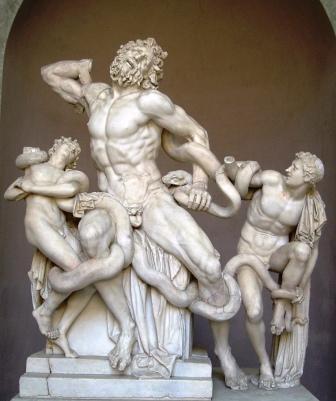
the laocoon, a famous roman sculpture--a man and his sons attempt a futile escape
from a sea serpent sent from the god Poseidon--discovered in the ruins of nero's
palace during michaelangelo's lifetime, and one that greatly influenced his
own style of sculpture.
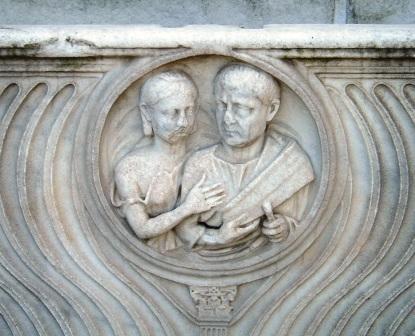
on the side of a roman sarcophagus, a husband and wife.
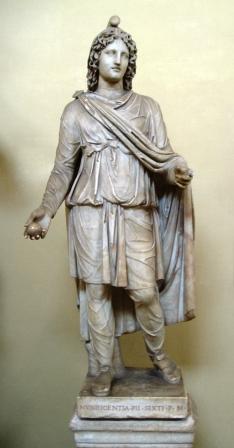
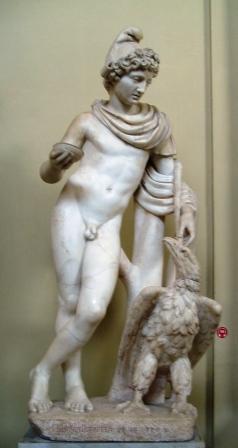
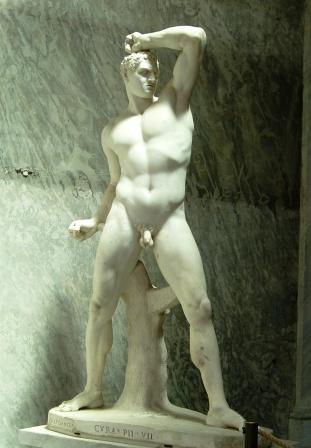
sculptures of the persian god mithra, on the left, the greek mortal, ganymede,
brought to heaven by zeus, in the center, and an athlete, on the right.
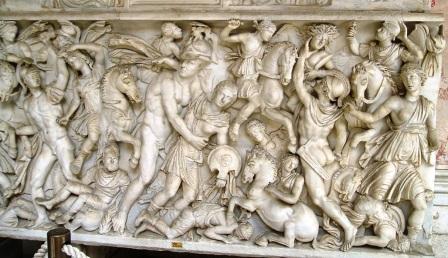
a triumphal altar showing the defeat of the mythical amazons.
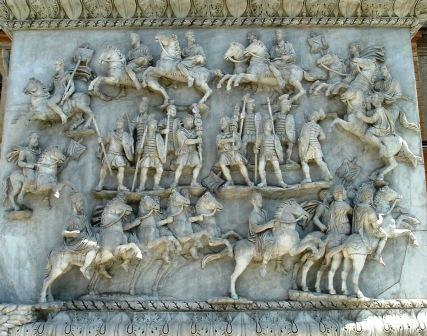
another triumphal altar, showing roman footsoldiers surrounded by barbarian
horsemen.
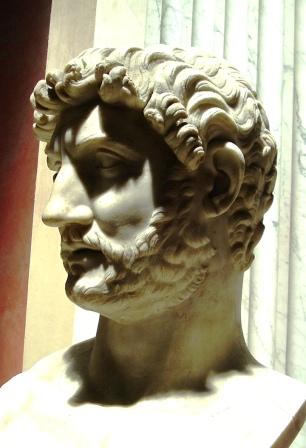
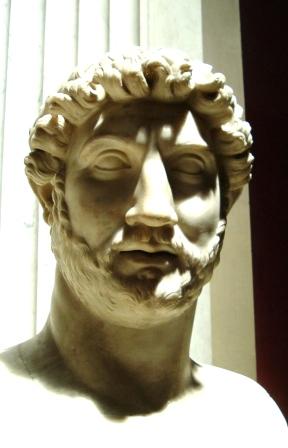
among the busts was this one of the roman emperor, Hadrian (ruled 117-138 a.d.).
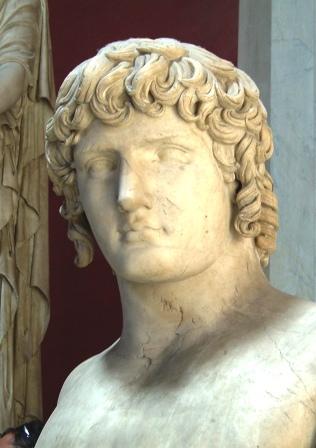
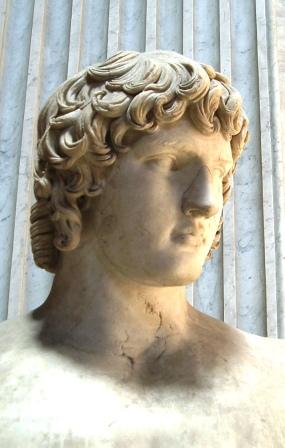
the emperor's companion was antinous, and when he died accidentally, hadrian
had him proclaimed a god and had thousands of statues of him placed across the
roman empire.
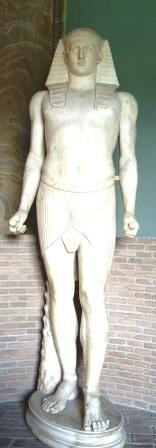
this statue shows antinous as an egyptian god.
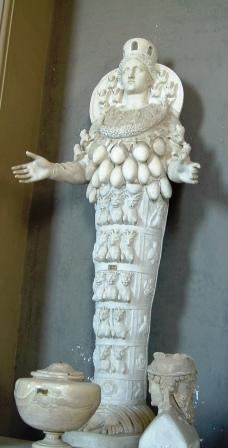
another famous ancient image, the goddess artemis in her aspect as "the
many breasted," based on an image of her in the main temple at ephesus
in asia minor.