E.U.R.
in our last full day in rome, we took the subway to the outskirts of rome, to a neighborhood known as e.u.r. the letters stand for "espositione universale di roma" and was begun in 1938, with the intention that rome would host a world's fair in 1942. the start of world war II put an end to the plans for an exposition, but when rome hosted the olympic games in 1960, the site was completed, a mix of residential towers and large public buildings. there are also office towers for large italian corporations in the neighborhood.
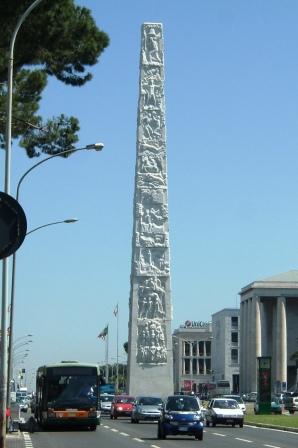
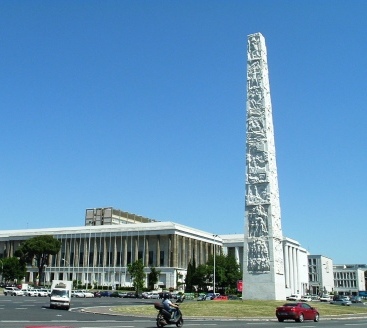
at the center of the neighborhood
is a modern obelisk, built in 1950 in honor of the italian marconi, inventor
of the radio.
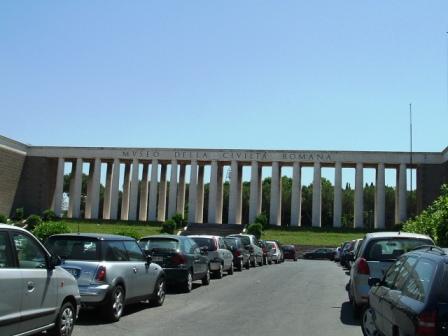
most impressive to us was the museum of roman civilization, which included modern
replicas of many ancient sculptures and miniature models of many famous monuments.
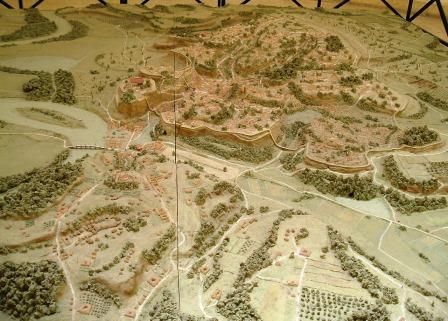
the museum also housed this model of rome in the early period of settlement,
not much more than huts on the seven hills.
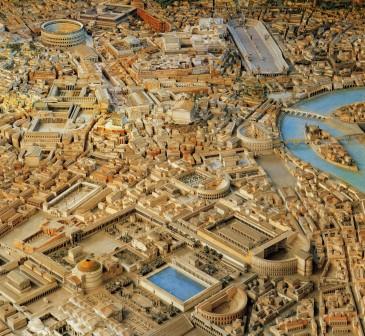
especially impressive was this model of rome at the end of the classical period.
it was a perfect opportunity for us to gain a larger perspective on all of the
sights we had seen while in rome.
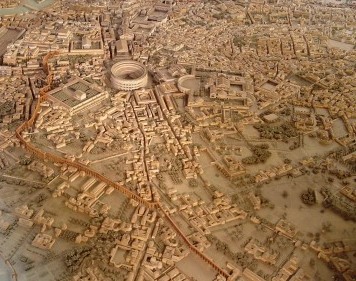
the colisseum is probably the most noticeable monument, but it is also easy
to make out the orange ribbon that was the main aquaduct in ancient rome (when
the barbarian invaders destroyed several sections of the aquaduct, in the fifth
century, rome's medieval decline truly began, because it became increasingly
difficult to get adequate water for its population).
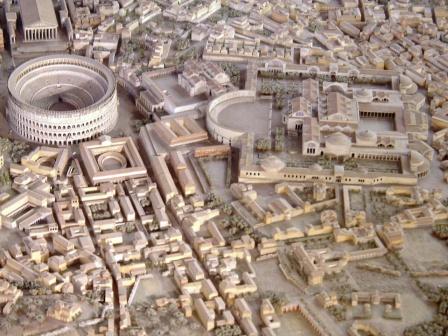
to the right of the colisseum are the baths of trajan, now in ruins. the site
of the apartment where we stayed would have been in the bottom, righthand corner
of this image.
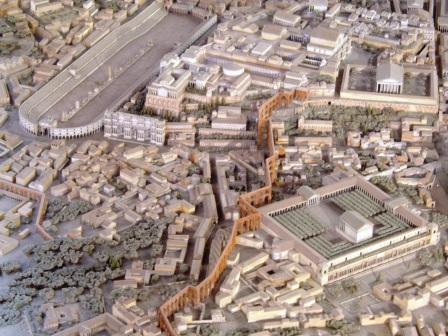
this section shows the aquaduct leading to the palatine hill, where the imperial
palaces were. in the distance is the circus maximus, and in the foreground is
the temple built to the emperor Claudius when he was proclaimed a god.
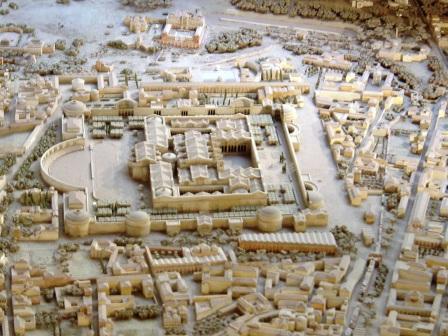
this section shows the expanse of the baths of diocletian.
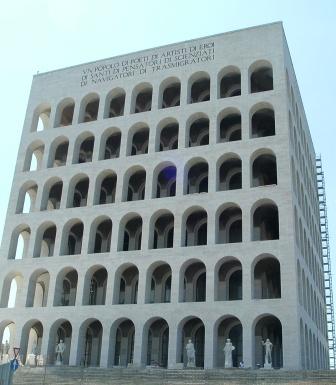
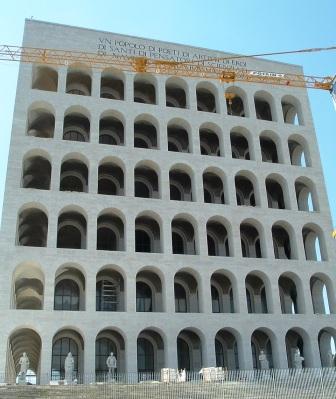
this building at E.U.R., called the Palazzo dell civilta del lavoro, was designed
in 1938 to be a modern--and square--interpretation of the colisseum.
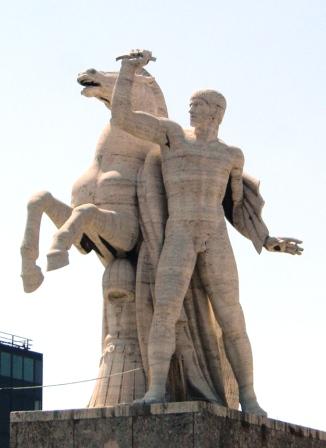
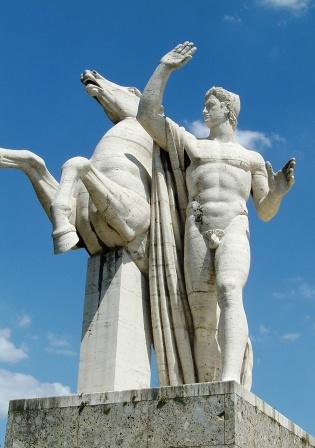
at the four corners of this building are allegorical statues representing the
glory of rome.
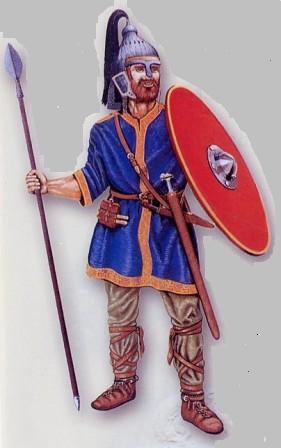
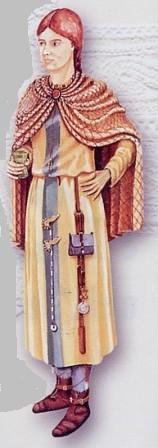
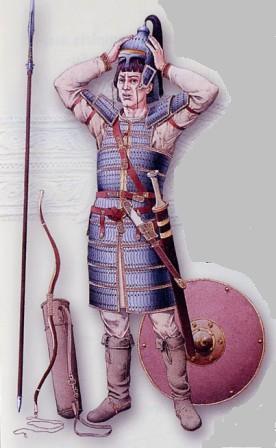
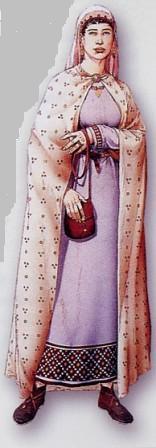
also at E.U.R. was the less than impressive museum of the early middle ages.
most of the museum's artifacts were grave goods, found buried with the early
medieval invaders of italy, the lombards. but images in the museum showed how
these goods formed part of the clothing of these barbarians.